
Everything You Need to Know About Making Your Own Wedding Dress
I’m seeing a rise in people taking on the single greatest challenge in home sewing: making their own wedding dress.
I'm Helen Shine, and I’m a London fashion week pattern cutter who has worked for brands such as Victoria Beckham, Mary Katrantzou and Karen Millen. I’ve made several bespoke, made to measure wedding dresses for various clients. I've been teaching pattern cutting and sewing workshops in Cornwall since 2019. In the last year I've started running a specialist 3-day class for people who want to make their own wedding dress, but don’t know how to design the pattern or fit the garment properly.
This post is my honest, comprehensive attempt to explain what making your own wedding dress actually involves, what the main challenges are, and how to give yourself the best possible chance of doing it well.
Why people want to make their own wedding dress
The reasons are usually a mixture of the following four things.
Cost: A professionally made bespoke wedding dress can run into the thousands, and that’s before you’ve had it fitted and altered, making your own can be significantly cheaper… if you have sewing skills already.
Fit: Commercial wedding dresses are sized for a standardised body, and alterations are expensive and sometimes limited in what they can achieve.
Meaning: The idea of wearing something on your wedding day that you made with your own hands, that fits your body exactly, that no one else in the world has, really is special.
Design: They have looked at whats available in the shops or in home sewing patterns and cant find the exact right dress they have designed in their heads.
The honest truth about the difficulty level
A wedding dress is one of the most technically demanding garments you can make. Most wedding dress designs involve elements that will challenge even experienced sewists. Structured bodices, tricky fabrics, boning, complex necklines, fitted sleeves, trains, multiple layers, invisible zips, intricate embellishment. Each of those things is a skill in itself.
I'm not saying this to put you off, I'm saying it so you can plan properly. The people who make their own wedding dress successfully are almost always the ones who started early and practised on cheaper fabric first.
Why the pattern is the thing most people get wrong
You can be an excellent sewist and still struggle with a wedding dress, because sewing skill and pattern cutting skill are genuinely different things. Most people who sew regularly have worked from commercial patterns, someone else has already done the technical work of turning a design into a set of flat shapes that, when assembled, create a three-dimensional garment.
When you're making your own wedding dress to your own design, you don't have that. You need a pattern that's specific to your body and your design. You can try adapting a commercial pattern, and sometimes that works, but for anything fitted, anything structured, or anything significantly different from the shapes commercial patterns come in, you really need a pattern that starts from your measurements.
This is where most people hit the wall. Not because pattern cutting is impossibly difficult, but because it's a technical discipline that takes time to learn and most people have never been taught it.
What a toile is and why you absolutely need one
A toile is a mock-up of your garment made in cheap fabric, before you cut into your expensive wedding dress fabric. It lets you see how the pattern works in three dimensions, identify fit issues, and make corrections before anything irreversible happens.
For a wedding dress, a toile is non-negotiable. It will need to be sewn using fabric similar to your final wedding dress fabric. Calico is not going to work here, except for maybe the corset layer.
A proper toile fitting also needs someone who knows what they're looking for. Fit issues in a bodice aren't always obvious to the untrained eye, and the corrections aren't always intuitive. Getting a professional eye on your toile, even once, is one of the most valuable things you can do.
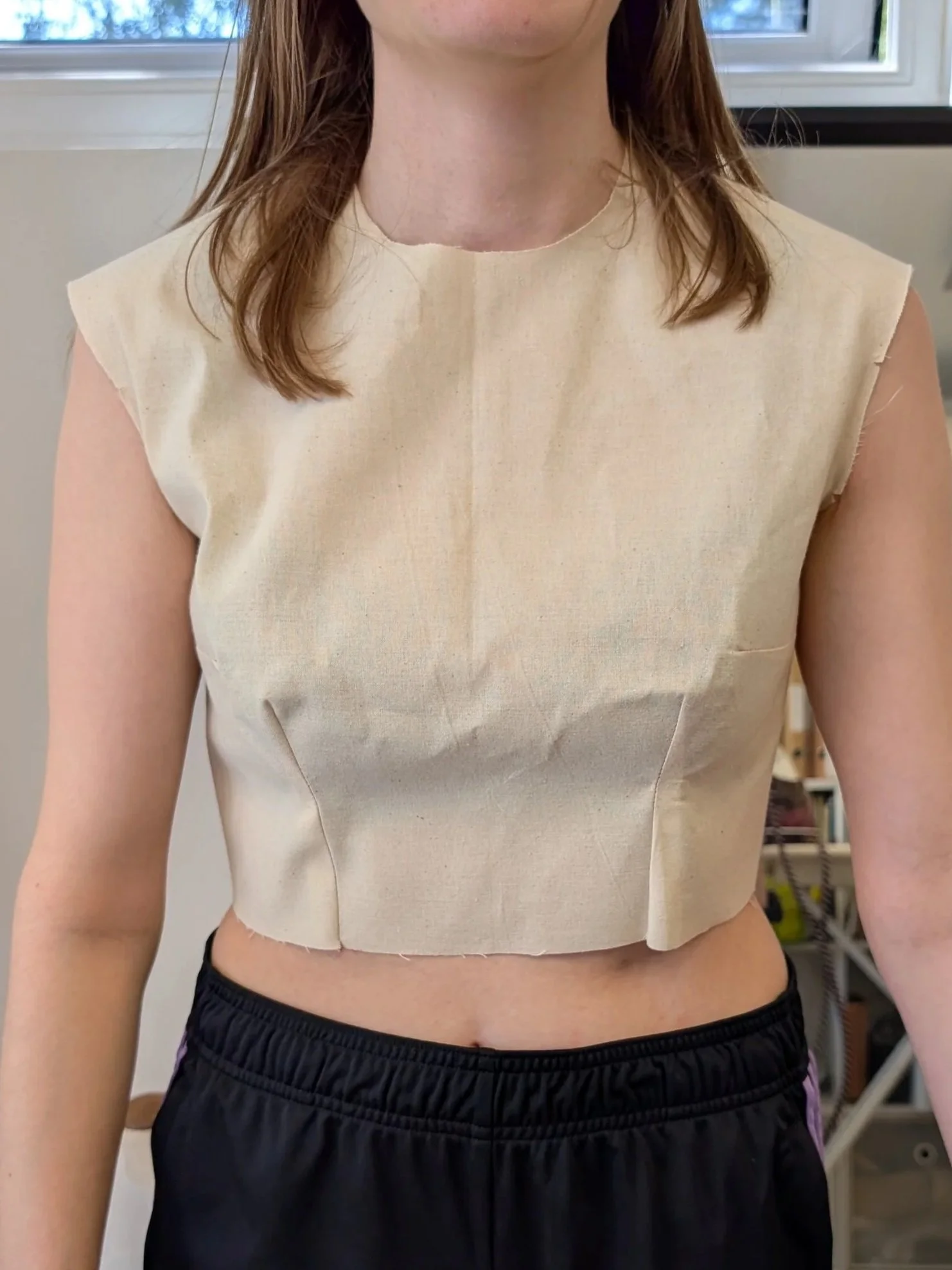
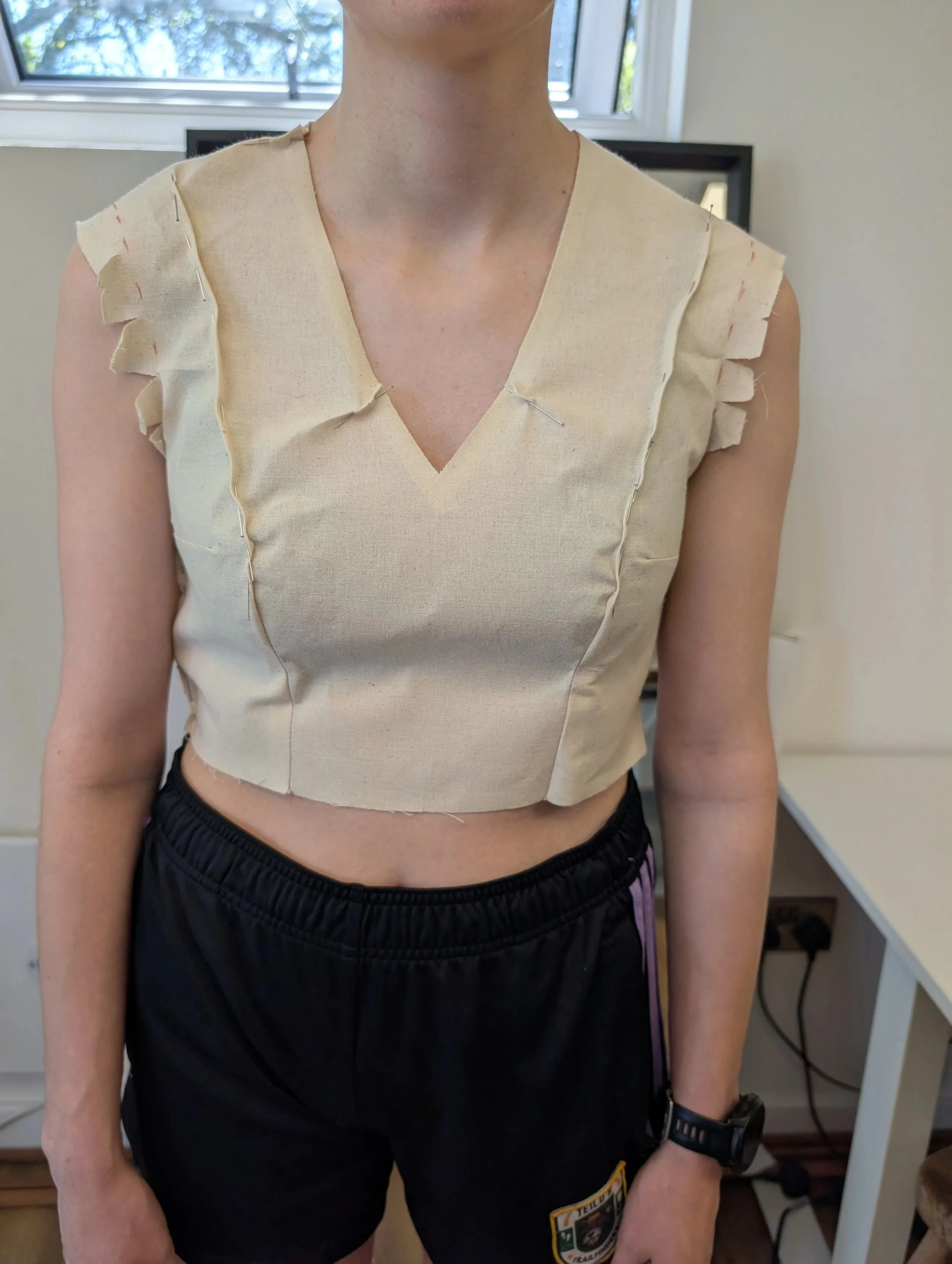
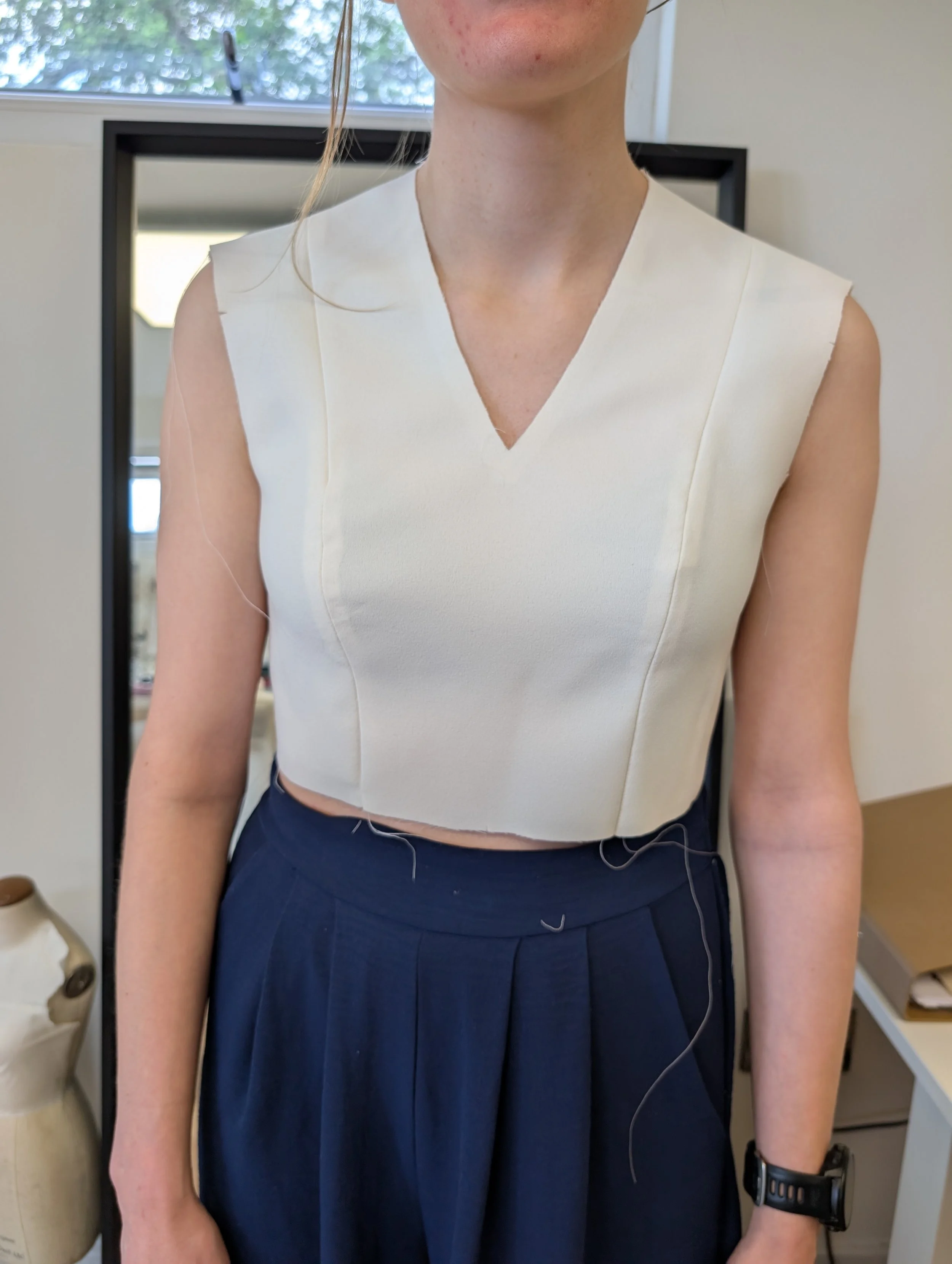
How can I fit the toile on myself?
If you don’t have anyone to help you fit, you are going to need a good camera set up and a decent mirror.
First, take photos of you wearing the toile from the front, side and back using a camera on self timer. Print out the photos on A4 so you can analyse the fit ‘objectively’ - it often works better than looking in the mirror. You can also take videos of you walking towards the camera, away from the camera, dancing, to see how it looks when you are moving.
Then start pinning where you notice any fit issues. Drag lines usually point to the problem, so start pinning. If its in a hard to reach area, you’ll need to estimate how much to pin, take off the garment, pin it, try it back on and keep repeating until the pins are in the correct place and you have taken the right amount. This all requires a bit of previous fitting knowledge and experience.
Next you are going to need to relate those amendments on to the paper pattern. This will mean measuring where you have pinned the toile and relaying that information on to the paper.
Finally, you will need to re-toile, to double check what you have done. If you have made very minor changes you may not need to do this, but big fitting adjustments or any big design changes require a new toile.
How long it actually takes
Far longer than most people expect. If you're making a simple dress with a good pattern and no major fit issues, you might get it done in 20-30 hours of cutting and sewing time. (Don’t underestimate the cutting time!!) A more complex dress with a structured bodice, multiple layers, and detailed work, can easily be 50 hours or more.
That's before you account for the pattern development and toile fitting process, which for a made-to-measure pattern could add another 15-25 hours. Spread that across real life, with work and everything else, and you understand why I always advise to start at least six months before your wedding, and a year is better.
The fabrics that will make your life harder
Silk charmeuse, chiffon, organza, and heavily beaded fabrics are beautiful and they're popular in wedding dresses, but they are all genuinely difficult to sew. They slip easily and need to be handled delicately. If you're making your own dress, I'd strongly suggest making your toile in a similar fabric to the real dress, so you can practise on a fabric that behaves how the real one will. It is also important to see how the real dress will fall and drape. Calico does not drape like satin and you wont get a good idea of how the real dress will look.
Duchess satin, crepe, and heavier silk dupion are much more manageable for a home sewist than the very fluid fabrics. They behave well, press well, and forgive small errors.
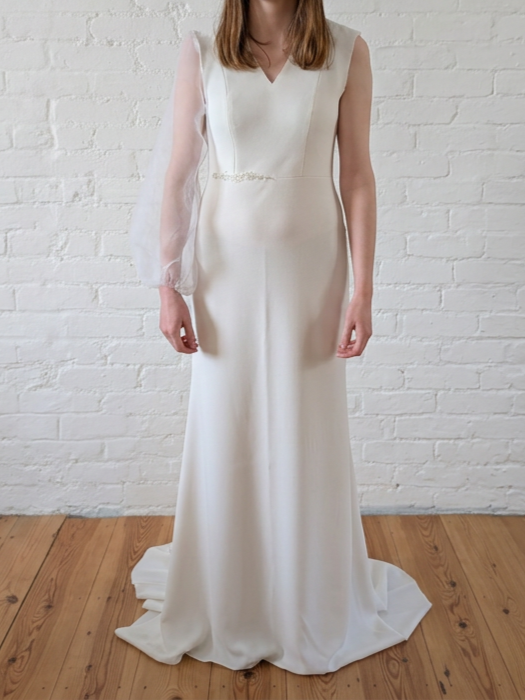
A toile of a wedding dress made in crepe, testing out the sleeve in organza, and the beadwork trim at the waist.
Where to get help
This is the question I get asked most often, and the honest answer is that good specialist help for this specific project is hard to find. Wedding dress designers and shops don’t offer this service. General sewing classes won't teach you pattern cutting and fitting. Pattern cutting courses are not focused on wedding dresses.
That's the gap I set out to fill with my 3-day wedding dress pattern cutting class at Dot n Cross in Cornwall. Students come to me with their design, sketches, photos, reference images, and over three days we build their pattern from scratch, sew and fit a toile, make all the amendments, and produce construction notes for the final dress. They leave with everything they need to go home and make their dream wedding dress. I also offer a one-hour follow-up call, for when the reality of starting on the final dress raises questions.
People travel from all over the UK for this class, which tells me how few options there are for this kind of specialist support.
My honest advice
Decide early. The earlier you start, the more time you have to learn, practise, and correct. Give yourself at minimum six months from pattern to finished dress, ideally twelve.
Be honest about your skill level. If you've never made a structured garment before, a complex fitted wedding dress is probably not your first project. Make some fitted bodices first. Understand how they work.
Invest in your pattern. Whether you adapt a commercial pattern, draft your own, or get professional help doing it, the pattern is the foundation of everything. A bad pattern cannot be rescued by good sewing.
Make a toile. No exceptions!
Get a professional fitting at least once. Even if you're doing everything else yourself, one session with someone who knows how to fit on a body is worth it.
And finally, enjoy it! Making your own wedding dress is a remarkable thing to do. The dress will mean something that a bought dress simply can't.
If you have questions about my 3-day wedding dress class or want to talk through whether it's right for you, email me at hello@dotncross.com. I'm always happy to chat.
Helen
Dot n Cross, Falmouth, Cornwall